How practical support and understanding have helped one Freemason continue to enjoy Lodge life
For Duncan Heritage, Freemasonry has been an important part of life for more than three decades. Now approaching his 80th birthday, Duncan has spent 31 years as a Freemason, serving his Lodges in a variety of roles and building friendships that have lasted for years.
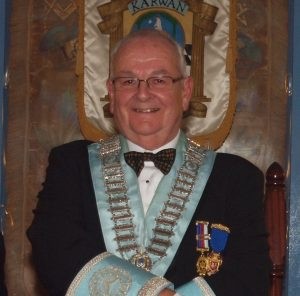
Originally from Ashford in Kent, Duncan moved to Hampshire in 1970 and spent his working life in the construction industry, eventually becoming a self-employed heating engineer. His introduction to Freemasonry came through a good friend, who simply asked whether he would be interested in joining.
He was Initiated, Passed and Raised in Caer Peris Lodge No. 8437 before joining Karwan Lodge No. 8970, where he has served as Worshipful Master on three occasions. He also became Visiting Officer for Clarence Lodge No. 8167 and, on retiring from the role, was honoured with honorary membership.
Throughout his Masonic journey, Duncan has always enjoyed taking an active part in Lodge life. However, living with Chronic Fatigue Syndrome has meant that participating is not always straightforward.
“I’ve always enjoyed my membership and enjoy participating as much as I can,” he explains. “But suffering from Chronic Fatigue Syndrome has made it difficult at times.”
The condition means Duncan cannot walk long distances or stand for extended periods. Rather than preventing him from taking part, his Lodges have worked with him to make simple, practical adjustments that allow him to continue contributing.
“When I’m participating in the ceremony, my Lodges allow me to do it seated.”
One recent meeting at Clarence Lodge perfectly illustrates how a little flexibility can make all the difference.
Duncan had volunteered to serve as Senior Warden during a Third Degree ceremony. He knew, however, that he would be unable to assist with part of the Raising ceremony because of his condition. After discussing the situation with the Worshipful Master and the Director of Ceremonies, they agreed that the Secretary would step in for that part of the ceremony.
“When I volunteered to act as Senior Warden for the Third Degree, I realised that because of my disability, I could not help in a part of the ceremony. The General Purposes Committee immediately said that it didn’t need to be a problem, as someone else could do that part. The Secretary said he would be happy to do it, which made me feel that I was really valued as an Honorary Member. Later, at rehearsal, it proved to work out very well.”
For Duncan, the experience demonstrates that inclusivity does not always require major changes. Often, it is simply about members working together to find practical solutions that allow everyone to play their part.
Duncan says he has always received understanding and encouragement from the members of his Lodges.
“I have received great understanding from the members, which has helped me participate whenever I can.”
“I always feel especially supported by my fellow members as they are always checking and asking if I need any help.”
That support has reinforced his belief that there should be no barriers preventing anyone from enjoying Freemasonry.
“There should be no barriers that prevent anyone from enjoying their Masonry,” he says. “The members of all my Lodges have been very supportive in helping me to get involved, which I always enjoy.”
For Duncan, remaining active in Freemasonry has also provided a strong sense of belonging. “I always get a great feeling of belonging to Freemasonry when I’m able to contribute something positive.”
Looking at Freemasonry today, Duncan believes it has become increasingly inclusive over the years.
“I’ve certainly seen Freemasonry become more inclusive,” he reflects. “I’ve witnessed a Brother in a wheelchair being welcomed and accepted.”
His involvement in Lodge life remains deeply meaningful to him.
“Being able to continue participating in the Lodge means a great deal to me. Looking back over the years, it has made me a much better man, husband and father.”
His advice to Lodge leaders is simple: encourage everyone to take part and be prepared to make sensible adjustments where needed.
“I would advise all Lodge leaders to make sure that all members are encouraged to participate, even making appropriate changes to the ceremony where necessary.”
For Duncan, inclusivity is not about treating people differently. It is about ensuring that every member has the opportunity to contribute, remain involved, and continue to enjoy the friendships and experiences that make Freemasonry so rewarding.
If you're curious about how Freemasonry can help you connect, grow, and find purpose, take the first step today. Register Your Interest and discover what it means to be part of our community!